How to Write Your Own Wedding Vows: A Step-by-Step Guide
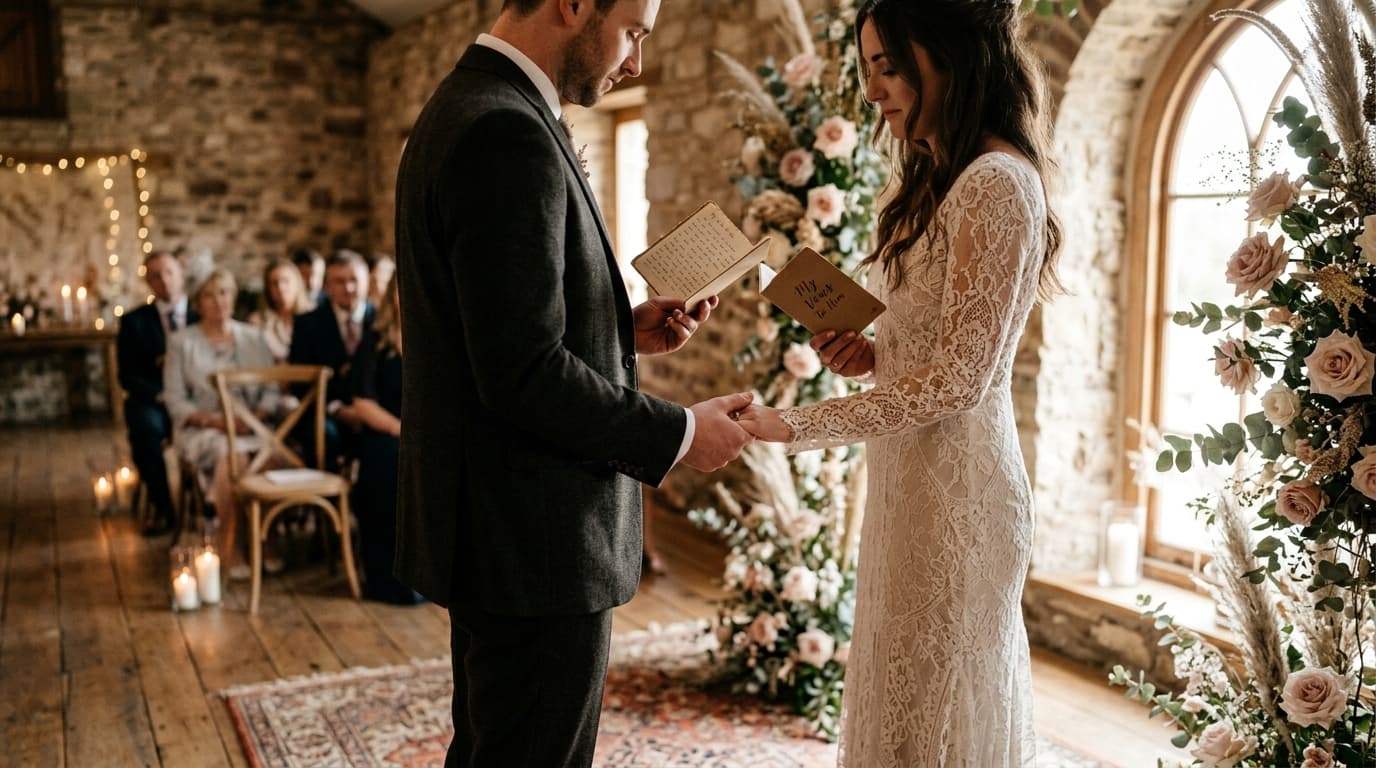
Why Write Your Own Wedding Vows?
Traditional vows are beautiful, but they're also... traditional. When you write your own vows, you're not just reciting words — you're telling your partner exactly what they mean to you, in your own voice. It's one of the moments guests remember most, and one of the most intimate exchanges you'll ever share.
The good news? You don't have to be a poet or a writer to craft meaningful vows. You just have to be honest. Here's how to do it, step by step.
1. Start Early — Not the Night Before
Give yourself at least 4–6 weeks before the wedding to write your vows. That might sound like a lot, but you'll want time to draft, revise, read them aloud, and let the words settle. Trying to write your vows the night before is a recipe for stress — and you deserve to walk down that aisle confident in every single word.
Start by journaling. Write down three things you love most about your partner, three promises you want to make, and one specific memory that defines your relationship. Don't edit yourself yet — just let it flow.
2. Decide on a Format Together
Before you start writing, have a brief conversation with your partner about the format. Will you both write personal vows? Will you also recite traditional vows for the legal portion of the ceremony? How long should each set be? Aim for 1–2 minutes per person — long enough to be meaningful, short enough to hold the room's attention.
You don't have to share the exact content before the ceremony, but agreeing on tone (funny vs. heartfelt, formal vs. casual) ensures you're not wildly mismatched when you're standing at the altar.
3. Use a Three-Part Structure
Great wedding vows tend to have three natural movements. Think of them as your roadmap:
- A reflection: A specific memory or moment that captures why you chose this person — something only the two of you would fully understand.
- A declaration: Who you are to each other and what this marriage means to you. This is your statement of love and commitment.
- Your promises: Concrete, personal commitments — not just "I'll love you forever," but "I promise to always be your biggest cheerleader, even when you're rooting for the wrong team."
The more specific, the better. Vague vows feel generic. Specific vows feel true — and they make your guests laugh, cry, or both.
4. Read Them Out Loud (Again and Again)
What reads beautifully on paper doesn't always sound right when spoken aloud. Once you have a solid draft, read it out loud to yourself in the mirror, then to a trusted friend or family member. Note where you stumble, rush, or lose your breath — those are the spots to revise. Practice until you can get through the whole thing without losing your place.
Also: print your vows in a large, easy-to-read font on a physical card. Nothing breaks the moment like squinting at tiny text through happy tears.
5. Always Keep a Backup Copy
Give a copy of your vows to your maid of honor, best man, or your wedding coordinator before the ceremony. Nerves are completely normal on wedding day, and having a backup ensures that even if your hands are shaking, you'll never lose your place. Your planner can quietly hand it to you at the altar if needed — no one will even notice.
Let The Wedding Unicorn Help You Set the Scene
Writing personal vows is one of the most intimate gifts you can give your partner — and the setting should be just as thoughtful as the words. At The Wedding Unicorn, we specialize in creating ceremony environments that feel as meaningful as the promises you'll speak. From intimate micro-weddings in the Hudson Valley to grand ballroom ceremonies in New York City, we handle every detail so you can focus on what matters most: saying "I do" from the heart.
Ready to plan a ceremony as unique as your love story? DM us or visit weddingunicorn.com to get started today.